 Matthew Goetting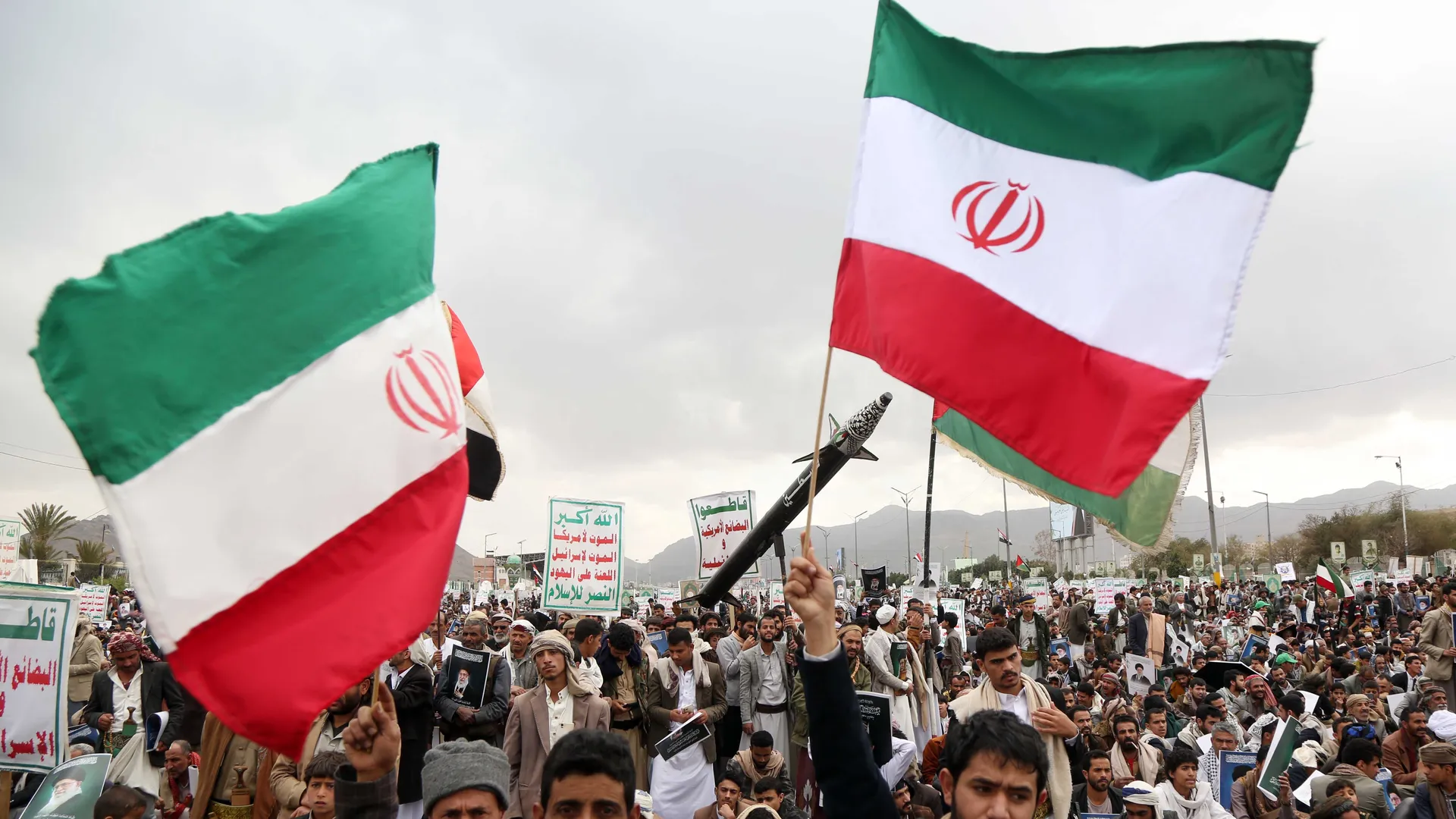
The Origin Story
-
1.
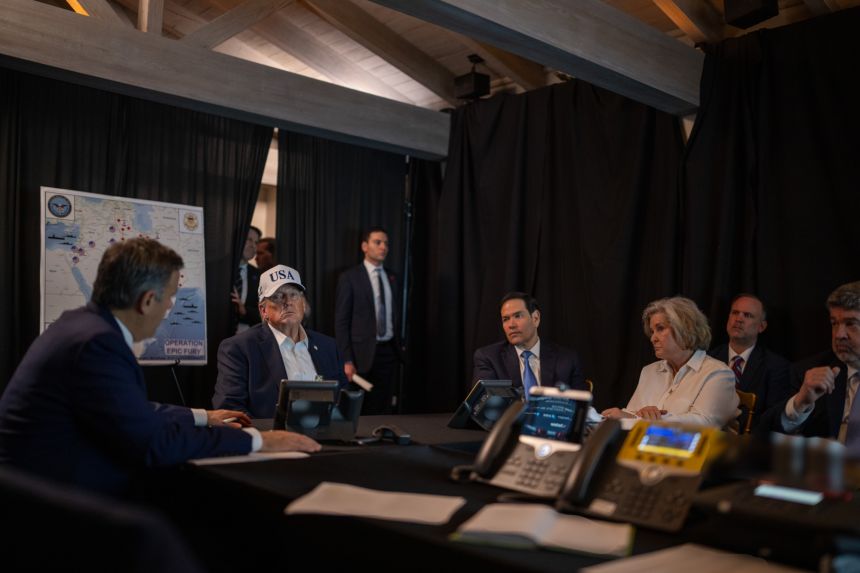
I think there's been a lot of misunderstanding about the source of this conflict. It's not helping that the Trump administration has cycled through at least three different justifications for Operation Epic Fury, and they all can be easily contradicted. First there's the nuclear argument: Trump said at the State of the Union that Iran was "enriching uranium at dangerously high levels," but the administration itself claimed Operation Midnight Hammer destroyed the nuclear program last June, and Rubio said Iran was "not enriching right now." Then there's the preemption argument: Iran was supposedly planning to strike American forces to create a "mass casualty situation," but the Pentagon briefed Congress that there was no intelligence Iran was planning to attack US forces first unless Israel struck first (I also find it highly unrealistic that Iran would hand over a casus belli to a much stronger adversary). Lastly, there's the Israel argument: Rubio said, "we knew there was going to be an Israeli action, we knew that would precipitate an attack against American forces." Of course that handed the opposition the narrative that Israel dragged the US into war, which Trump and Rubio had to walk back. Ultimately, I actually think the administration has a compelling reason for war, they're just having a hard time making it publicly.
-
2.
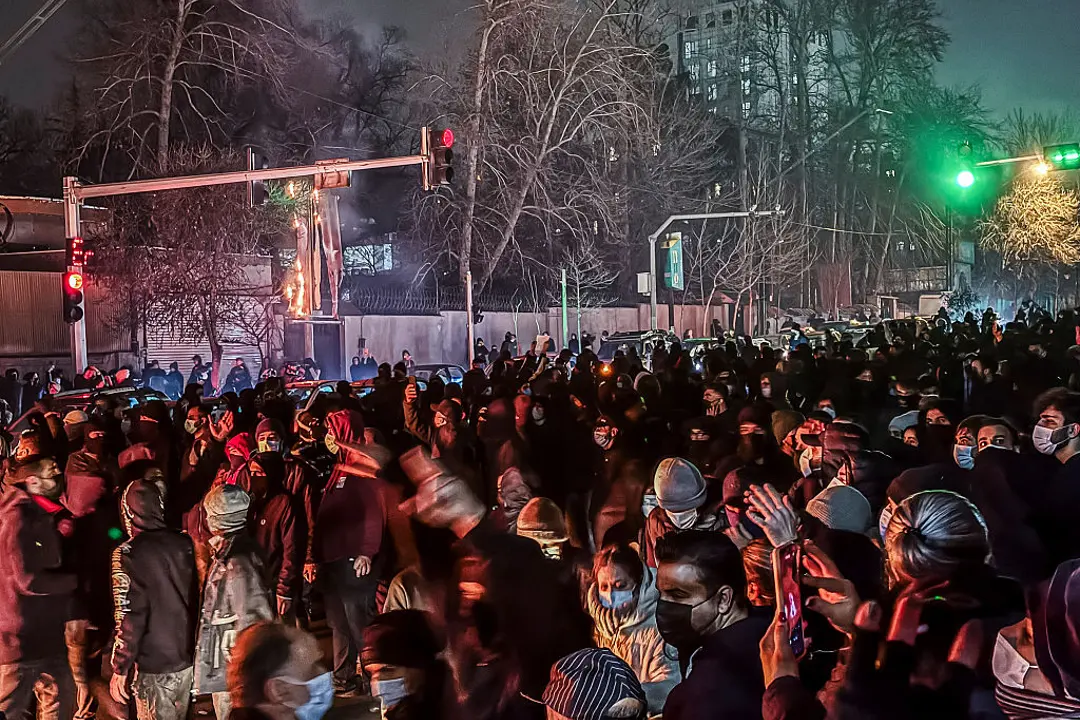
I think the broad sequence of events goes something like: in late December, massive nationwide protests erupted in Iran, driven by runaway inflation and broader economic collapse. It quickly became one of the largest protest movements in the country's history, easily comparable to the Mahsa Amini protests or the 2009 Green Movement. Traditionally, Iranian protests have been driven by women and the youth, which the regime knows how to frame as Western subversion. But in this case, it was bazaari merchants and the working class, which are huge parts of the regime's support base. President Pezeshkian, sensing the pressure, publicly admitted responsibility and pledged to overhaul the economy.
-
3.
As the protests continued to grow past what anyone anticipated, Trump grew optimistic and offered explicit support. He posted, "if Iran violently kills peaceful protesters, the United States will come to their rescue. We are locked and loaded and ready to go." A week later, as the protests reached their climax, he escalated: "Iranian Patriots, KEEP PROTESTING — TAKE OVER YOUR INSTITUTIONS!! Save the names of the killers and abusers. They will pay a big price." The goal was to put the regime in an impossible position. If they used force to crush the protests, the US would destroy them, but if they didn't use force, they would get overrun. My own read at the time was that Iran's best play was a moderate amount of force, enough to scare unarmed civilians, but not enough to cause an international incident. It's unclear exactly what happened, but it appears the regime called Trump's bluff. Estimates of the death toll range from several thousand to over thirty thousand killed, along with mass arrests. At this point, I felt Trump was compelled to act because one could say he had blood on his hands. He encouraged protesters with explicit promises of US support, and the regime massacred them.
-
4.
The question now became: do you conduct a smaller, symbolic strike or hit with full force? Iran is at its weakest and most fragile point ever, economically collapsed. The 12-day war last year had shown its military strength to be far weaker than advertised, with Israeli planes striking targets with impunity. The Axis of Resistance had been decimated. So given that we're going to do something, why kick the can down the road again? Clearly, the administration sees this as the "war to end all wars," at least as far as Iran is concerned. By February 19, the buildup was described as the largest in the Middle East since the 2003 invasion of Iraq. Trump prepared the American people for something much more extensive than a limited strike during his opening statement. He said, "the lives of courageous American heroes may be lost and we may have casualties, this often happens in war." They went after Khamenei on day one. They hit 2,000 targets. The military precision is itself evidence that whatever the public justification is, the operation was well thought out and planned well in advance.
-
5.
The diplomacy was clearly fake. By the time the Ford and Lincoln were both sitting in the Middle East and the US had been airlifting equipment nonstop for weeks, they had already paid significant costs. The whole original motivation here was to restore credibility after the protest massacre and take advantage of Iran's internal collapse to end the Iranian problem for good. It would be genuinely malpractice at that point to hand the regime a deal that gives them a lifeline and lets them rebuild. Any deal the US agrees to, given the military disparity, would have to be better than what they could get by force. This explains the maximalist nature of the demands, where the US asked Iran to not only permanently give up nuclear weapons, but destroy the three main nuclear sites at Fordow, Natanz, and Isfahan, deliver all remaining enriched uranium to another country, abandon its ballistic missile program, and stop proxy funding. The point was to give Iran impossible demands so the administration could say, "well, we tried."
The Case For It
-
6.
But why is any of this our problem? I was reading Matt Yglesias's piece on this earlier, where he argues America should be less involved in the Middle East, that we're "literally fighting regional battles with Iran on behalf" of Israel and the Gulf states, and that we don't need to be involved on this level. He argues that even the most pro-Ukrainian countries aren't sending soldiers to the front, that the United States isn't bombing Russian oil refineries, because "the costs of doing these things are just too high." But I'm genuinely confused whether he's making a capabilities argument or a principles argument. What do you think the West's response to the Ukraine invasion would be if Russia's military looked like Iran's? The reason NATO isn't flying jets over Moscow isn't some abstract commitment to non-intervention; it's that Russia has nuclear weapons and a real military, and starting that fight has catastrophic downside. But Iran's navy is gone. Their air defenses are dead. Their retaliation capacity is down 73% from day one. This is the cheapest large-scale military operation the US has run in decades relative to what it accomplished.
-
7.
And let me make the positive case for why all this is in our interest. We clearly have competing national interests with China, and 90% of Iran's oil goes to China at a significant discount, as Iran has basically no other customers due to sanctions meaning China has all the leverage. A friendly Iran rejoining the dollar system and selling at market prices to diverse customers is a direct material cost to China's energy security and to the Yuan settlement experiment. Iran was simultaneously supplying Russia with Shahed drones that were killing Ukrainians while the US was spending over a hundred billion dollars supporting Ukraine. Japan and South Korea get roughly 80% of their energy through the Strait of Hormuz, so Iran's ability to threaten the energy security of two of our most important allies in the most important strategic theater on Earth is dangerous. Iran also has the second or third-largest natural gas reserves on earth, and a friendly Iran integrated into Western energy markets solves the problem of finding an alternative to Russian gas for Europe. Iran is also 85 million people with one of the highest literacy and education rates in the region, a large suppressed tech and entrepreneurial class, and the human capital profile of a South Korea or Turkey or Germany rather than an Iraq. The Iranian diaspora is heavily overrepresented in Silicon Valley and is by any measure extremely successful. A friendly Iran means that talent, investment, and institutional knowledge flows back immediately, and would create one of the fastest-growing and most lucrative emerging markets in the world. And then there's the humanitarian dimension, which I don't want to be dismissive of. This is a regime that shoots protesters with snipers and hangs teenagers, claiming they're "Mossad agents". If we can get to a world where Iran is far more friendly to US interests and far less repressive of its population at a low cost, then why don't we?
What Comes Next
-
8.
How do we actually get to the "friendly Iran" outcome while keeping it low cost? Very publicly, one of the original aims of the US and Israel has been destroying police stations, IRGC, and Basij facilities in order to weaken the repressive power of the regime. The hope is that perhaps one day we'll say "Okay, we're done, it's the people's turn now," and the public can rise up without fear. But I've become less and less confident that this specific strategy will work, and that we'll end up in a world where there's a popular revolt, the IRGC is overthrown, a secular democracy is established, and Reza Pahlavi is flown in to serve as transitional leader (sorry to rain on the Persian diaspora's parade). No matter how many buildings you bomb, nothing changes the reality that the IRGC has guns and the people don't. In fact, the war itself has actually increased domestic repression in the short term; the police are stopping people's cars and asking to look at phones, and they're hunting down people who celebrated Khamenei's death. Trump has clearly realized this as well. Asked about Pahlavi specifically, he said, "It would seem to me that somebody from within might be more appropriate," and he told Axios that "I have to be involved in the appointment, like with Delcy in Venezuela." And while Azerbaijan and Kurdish separatist groups may launch ground incursions in the North that stretch and weaken the Iranian military, it's not going to impact governance in Tehran. True change is going to have to come top-down rather than grassroots.
-
9.
The US is probably looking for a powerful and pragmatic Iranian leader who would accept the following offer: we'll support you taking over and consolidating power if, in return, you meet US interests in security and energy, reform the government, significantly reduce repression, and free political prisoners. In exchange, the US will relieve sanctions and save the Iranian economy. This is the exact playbook Trump used in Venezuela, and in that case, it directly benefited all relevant parties (Americans, Venezuelans, and Delcy Rodriguez). Iran has shown itself to be relatively pragmatic rather than purely ideological when it matters. After the Mahsa Amini protests, they quietly stopped enforcing the hijab law; these principles are less important to them than maintaining power.
-
10.
And so, I think the apparent goal is to keep the power vacuum running as long as possible, increasing the pressure on someone inside Iran's power structure to make a deal. Through this lens, the potential election of Mojtaba Khamenei as the new Supreme Leader would be, from Washington's perspective, a disaster. Not only is Mojtaba a brutal hardliner, but his election would represent the IRGC's defiant continuation despite Ali Khamenei's assassination, and it strains credulity that he would negotiate with the country that just killed his father. Trump admitted Mojtaba is the most likely successor, but stated, "Khamenei's son is unacceptable to me. We want someone that will bring harmony and peace to Iran." And while Mojtaba is still the favorite on Polymarket, his odds have tanked recently from 82% to 46%, a signal that the US would never permit him to consolidate power in the first place. His election would probably be a massive waste of time from the administration's standpoint: he has a massive target on his back, would never be able to appear publicly, and would eventually be killed. This is likely why Politico reported that CENTCOM expects the war to last through September. Trump's four-week timeline is to assuage domestic concerns, the administration is signaling it won't leave until it gets its desired outcome, continuing to bomb facilities, degrade Iran's retaliation capacity, and prevent anyone from centralizing power until someone accepts the deal.
-
11.
The challenge for the US now is diminishing returns. You can hit as many bases as possible, but at some point you run out of valuable targets, and whatever leadership is left is well-hidden. Meanwhile, Iran's strategy is pretty transparent: make us pay as high a cost as possible in casualties and equipment, and use the Strait of Hormuz to raise our cost of living. If they can hold out long enough for us to exhaust our best targets, our momentum stalls and they can force a peace on their terms.
-
12.
I'm very surprised the US has let Iran retain this much leverage over Hormuz. It's somewhat humiliating that our navy is sitting there while Iran is still exporting its oil to China unimpeded. The obvious response is to say "if the strait is closed to us, it's closed to you." There must be a reason for not doing this, and my best guess is they don't want to be in a position where enforcing it means directly confronting China. But that's a significant concession. Once diminishing returns set in, our only real lever is economic. Iran's economy is already at an all-time low, and revolutions tend to be fomented by sustained economic pain more than military defeat. The break-glass option is destroying Kharg Island and cutting off their oil exports entirely, combined with broader industrial strikes. But none of this works quickly. Iran can absorb short-term punishment and wait Trump out. The maximum pressure only becomes unbearable over many months, which is why if the administration is serious, this has to be a longer war than anyone is currently being told to expect.
-
13.
The US came into this with very ambitious goals, and for the sake of the Iranian people, I genuinely hope some real progress is made rather than a scaled-back deal that just kicks the can down the road again.